Fall & Winter Programs
Year-Round Conservatory Model
At OYES, the production is the classroom.
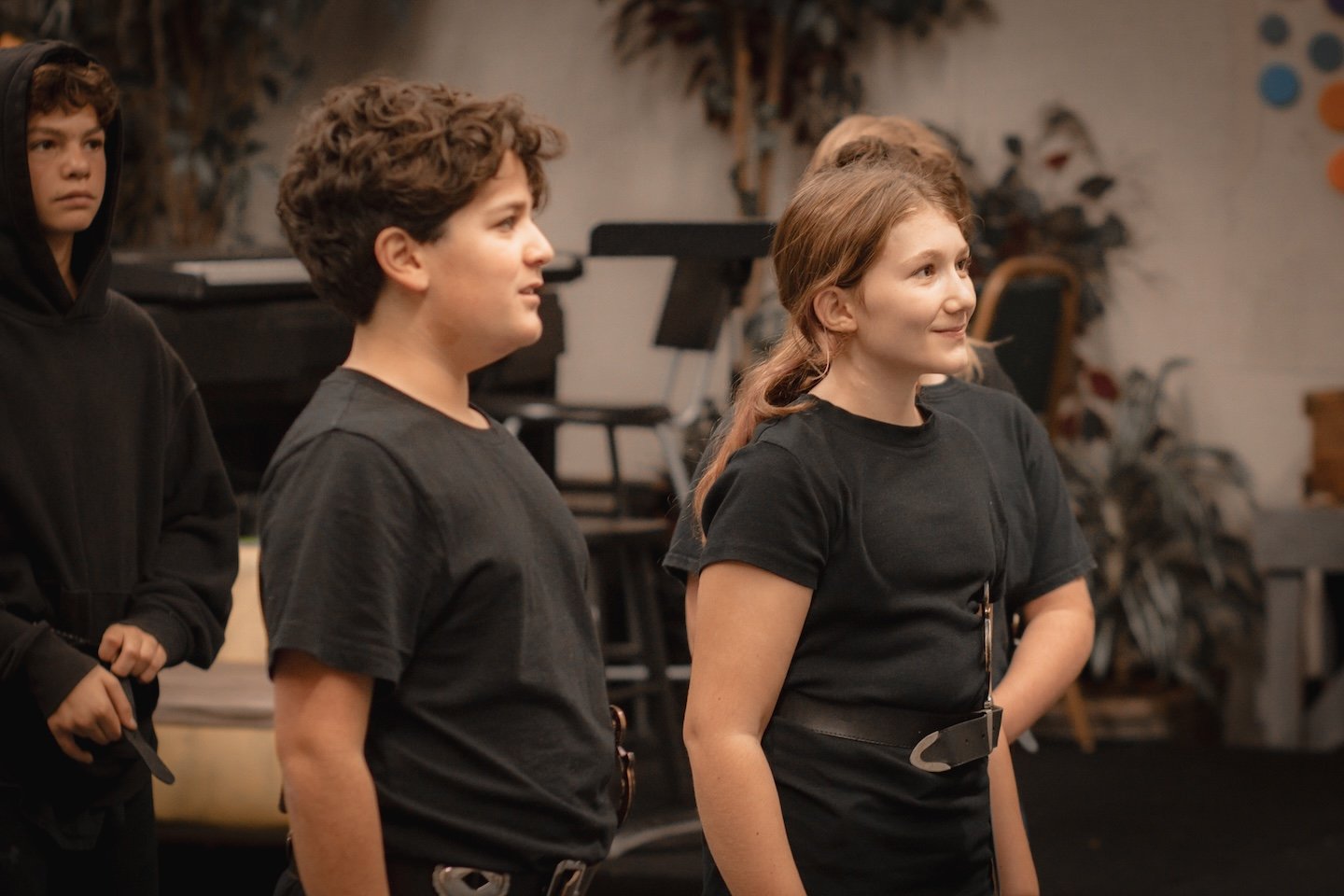
At OYES, the educational component is built directly into every production. Rehearsal isn't only about preparing a show. Weekly rehearsals include workshops, games, exercises, and more.
Within each production, OYES identifies opportunities to deepen particular skills, bring in specialized educators, and adjust the level of responsibility to the age and experience of the actors.
Young artists develop imagination, movement, stage presence, ensemble skills and creative confidence through the process of making theatre together.
Skills and Learning Goals
Voice: Pitch, volume, mouth shapes and basic pronunciation
Memorization: Lyrics, blocking/staging, simple dance choreography
Stage presence: The Actor’s Toolkit (body, voice, imagination), Emotions, Stage Directions
Themes: Play/Improvisation/Creation vs Rehearsal, Repetition of learned material
Workshops
Tableaus (stage picture and levels)
Scene Study
Improv
Laban Movement Efforts
Dialects
LABAN FEATURED WORKSHOP
With specialized training in the Laban system and her extensive dance education, Emma-Rose Allen will guide students to grow and enhance their performance skills in focused Laban workshops. We will dive deep into expressing emotions to tell a story, and how to make engaging, unique choices, that bring our acting roles to life! We will explore Laban’s eight efforts through weight, space, time, and flow to create unforgettable performances that will shine in any audition or show.
To learn more about the Laban movement course, click here
OYES provides opportunities for young performers to develop their skills through a conservatory-style model that connects training, rehearsal, and performance. Students may participate in a full theatrical production or focus on specific areas of performance training.
This structure helps expand access to more young performers who might otherwise be unable to participate due to enrollment limits.
PERFORMANCE ARTS
-
OYES’ Youth Musical Theatre program functions much like advanced music, dance, or athletic training: students participate in weekly rehearsals that build toward a culminating weekend of performances. Rehearsals combine ensemble work, technique development, and focused rehearsal time for music, staging, and choreography. Throughout the process, students strengthen confidence, communication, and organizational skills while engaging deeply in the collaborative craft of theatrical storytelling. Participation in the Youth Musical Theater program is by registration. Auditions held for placement.
-
Young Actors Ensemble (YAE) builds on the foundation of OYES’ youth theatre program by inviting older students to take on more complex material and performance challenges. Material ranges from straight plays, to Shakespeare, to musicals. Rehearsals combine ensemble work, technique development, and focused staging while encouraging deeper character exploration, musical storytelling, and collaborative artistry within a fully staged production.
Participation in the YAE program is by registration. Auditions held for placement.
-
Performance Company (PC) is an advanced production program for actors ages 13–19.
Participation is by audition, and casting is determined through a formal audition process. Roles are offered based on demonstrated preparedness, commitment, and artistic merit.
This program maintains an educational component. Tuition fees apply, and registration is required.
-
Theater for Young Audiences
Theatre for Young Audiences (TYA) is an audition-based production program where young adult actors are cast in full-length theatrical productions created specifically for young audiences. Casting is determined through an audition process, with roles offered based on artistic merit, preparedness, and commitment to the rehearsal process.
These productions are designed to introduce younger audiences to the magic of live theatre through engaging storytelling and high-quality performance. Participation in Theatre for Young Audiences is by audition, and there are no registration fees for actors selected to participate.
TECHNICAL ARTS
-
Ojai Youth Entertainers Studio (OYES) is expanding its youth training programs to include a Technical Theater & Lighting Design Apprenticeship — a hands-on pathway for students interested in the art and science behind live performance.
Launched in July 2025 as a free training opportunity, the program introduces young people to lighting design, console programming, cue building, and live board operation during real productions. Under the mentorship of professional designers and technicians, students gain practical experience in safe equipment handling, problem solving, collaboration, and live show execution.
While many youth programs focus on acting, OYES is intentionally building access to backstage careers — creating opportunities for students who thrive in technical, engineering, and design environments.
As the only year-round K–12 arts organization in the Ojai Valley, OYES is committed to developing the next generation of creative technicians and industry professionals.
-
In addition to lighting and technical theatre training, OYES is expanding opportunities for students interested in stage management and sound design. These roles introduce young artists to the organizational and technical leadership that keeps a production running smoothly. Student stage managers learn how to track rehearsals, coordinate communication between departments, and assist with calling cues during performances, while sound design students explore microphone setup, mixing, cue playback, and the technical support of live music and voice.
Through mentorship and hands-on experience during real productions, students gain insight into the collaborative systems that support live theatre while developing skills in problem solving, leadership, and production management.